
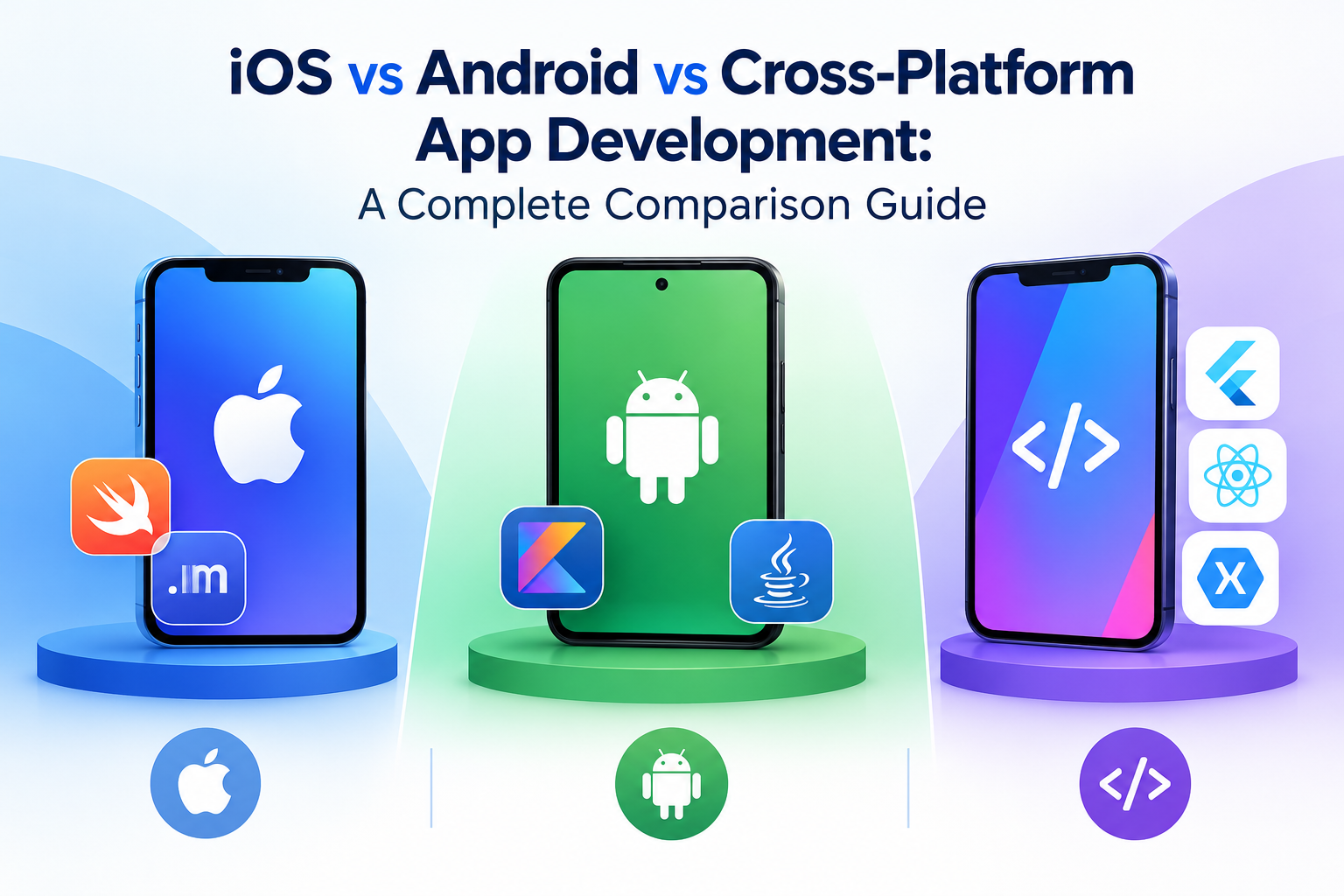
Mobile applications have become an essential part of modern business, helping companies connect with customers, improve user experiences, and expand their digital presence. However, choosing the right development approach can be challenging, especially when deciding between iOS, Android, and cross-platform development. Each option offers unique advantages, limitations, and opportunities depending on business goals, budget, and target audience.
In this guide, App Scoop explores iOS vs Android vs cross-platform app development to help businesses, startups, and developers understand their differences and choose the most suitable approach for their projects.
Understanding the Three App Development Approaches
Before comparing these technologies, it is important to understand how each development approach works and what makes it different.
What is iOS App Development?
iOS app development focuses on creating applications for Apple’s mobile operating system, primarily used on iPhones. Developers commonly use Swift or Objective-C, along with Apple’s development tools, to build applications that follow Apple’s design guidelines and technical requirements.
One major advantage of iOS development is its relatively consistent hardware and software environment. This allows developers to optimize performance, maintain design consistency, and deliver a polished user experience. Businesses targeting premium smartphone users or customers in markets with a strong Apple presence may benefit from choosing iOS.
What is Android App Development?
Android app development involves building applications for devices running Google’s Android operating system. Developers commonly use Kotlin or Java, supported by tools such as Android Studio.
Android powers smartphones and tablets from numerous manufacturers, offering businesses access to a broad range of users across different regions and price segments. Its flexibility also allows developers to customize applications for various devices and user requirements.
However, supporting multiple manufacturers, screen sizes, and operating system versions may increase testing and maintenance requirements.
What is Cross-Platform App Development?
Cross-platform app development allows developers to create applications for multiple operating systems using a shared codebase. Instead of building entirely separate applications for iOS and Android, teams can reuse a substantial portion of the code.
Popular frameworks include Flutter, React Native, and .NET MAUI. These technologies can help businesses reduce development effort while maintaining applications across different platforms.
Cross-platform development is particularly useful for startups and companies seeking to launch products efficiently without managing two completely separate development projects.
iOS vs Android vs Cross-Platform: Key Differences
Understanding the main differences between these approaches helps businesses evaluate their suitability for specific projects.
1. Development Cost
Cost is often one of the first considerations when planning a mobile application.
Native iOS and Android development generally require separate platform-specific implementations. This can increase development expenses when a business wants to launch on both operating systems.
Cross-platform development can reduce costs by allowing teams to reuse code, share development resources, and streamline updates. However, the final cost depends on application complexity, integrations, testing requirements, and the need for platform-specific features.
Best choice: Cross-platform development can be cost-effective for businesses launching on both platforms with a limited budget.
2. Performance and Speed
Performance affects loading times, responsiveness, animations, and overall user satisfaction.
Native iOS and Android applications can provide excellent performance because developers can work directly with platform-specific APIs and tools. This approach is especially valuable for applications involving advanced graphics, intensive processing, or specialized device capabilities.
Modern cross-platform frameworks also deliver strong performance for many business applications. However, applications requiring extensive native functionality may need additional platform-specific code and optimization.
Best choice: Native development is often preferable for performance-intensive applications, while cross-platform development works well for many everyday mobile experiences.
3. User Experience and Interface Design
A consistent and intuitive interface is essential for user engagement.
Native development makes it easier to follow the design conventions of each operating system. iOS users and Android users may expect different navigation patterns, interface elements, and interactions.
Cross-platform frameworks allow teams to maintain a consistent visual identity across platforms while adapting selected elements to individual operating systems. The quality of the experience depends on the framework, implementation, and design decisions.
Best choice: Native development offers direct control over platform-specific experiences, while cross-platform development can balance consistency with platform adaptation.
4. Development Time
Launching an application quickly can provide businesses with a competitive advantage.
Native development often requires separate implementation and testing efforts for iOS and Android. Although some business logic and backend services can be shared, the user interfaces and platform-specific components may require additional work.
Cross-platform development can shorten development timelines because much of the application code is shared. This can make it easier to release features across both platforms with coordinated updates.
Best choice: Cross-platform development is often suitable for businesses prioritizing faster launches across multiple operating systems.
5. Maintenance and Updates
Mobile applications need regular updates to address bugs, improve security, introduce features, and remain compatible with operating system changes.
Native applications may require separate updates for each platform, increasing coordination requirements. Cross-platform applications can simplify maintenance through a shared codebase, although platform-specific fixes and testing may still be necessary.
Best choice: Cross-platform development can simplify ongoing maintenance when most application functionality is shared.
Advantages and Limitations of Each Approach
Every development strategy involves trade-offs. Businesses should evaluate both benefits and limitations before making a decision.
Advantages of iOS Development
- Strong integration with Apple’s ecosystem.
- Consistent hardware and software environment.
- Access to native iOS features and APIs.
- Detailed control over platform-specific user experiences.
Its main limitations include a narrower device ecosystem and the need for a separate Android implementation when targeting both platforms.
Advantages of Android Development
- Access to a broad global smartphone audience.
- Flexibility across devices and manufacturers.
- Integration with Android-specific services and features.
- Opportunities to serve users across different price segments.
Potential challenges include device fragmentation, compatibility testing, and additional optimization for different hardware configurations.
Advantages of Cross-Platform Development
- Shared codebase for multiple platforms.
- Potentially lower development and maintenance costs.
- Faster feature delivery across iOS and Android.
- Efficient resource allocation for smaller teams.
However, complex applications may require native modules, specialized debugging, or additional optimization. Framework dependencies and third-party library compatibility should also be considered.
How to Choose the Right App Development Approach
Selecting the right approach requires evaluating your business objectives rather than simply choosing the most popular technology.
Choose iOS Development If
Your primary audience uses Apple devices, your application depends heavily on iOS-specific capabilities, or your project requires a highly tailored experience within Apple’s ecosystem.
Choose Android Development If
Your target market includes a broad range of Android users, your application depends on Android-specific features, or your business needs to support particular Android devices and integrations.
Choose Cross-Platform Development If
You want to launch on iOS and Android within a limited budget, your application relies mainly on shared business functionality, or you need to deliver updates across platforms efficiently.
Before deciding, consider your target audience, available budget, expected performance requirements, development timeline, and long-term maintenance plans.
Conclusion
Choosing between iOS, Android, and cross-platform app development depends on your project’s priorities, technical requirements, and business strategy. Native iOS and Android development provide platform-specific control and can be ideal for applications requiring specialized functionality or highly optimized experiences. Cross-platform development offers code reuse, faster delivery, and potential cost savings for businesses targeting multiple operating systems.
The best choice is the one that aligns with your users’ needs and long-term goals. By carefully comparing development costs, performance, user experience, and maintenance requirements, businesses can make more informed decisions.
At App Scoop, we believe understanding these differences is an important first step toward building successful mobile applications. A well-planned development strategy can help businesses deliver valuable digital experiences, reach their target audiences, and grow sustainably in an increasingly mobile-first world.